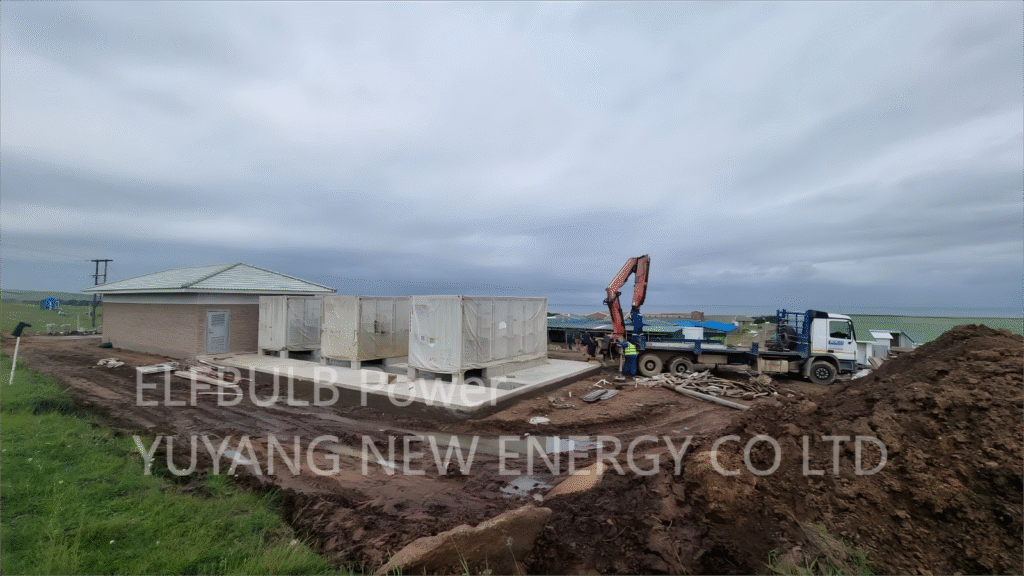
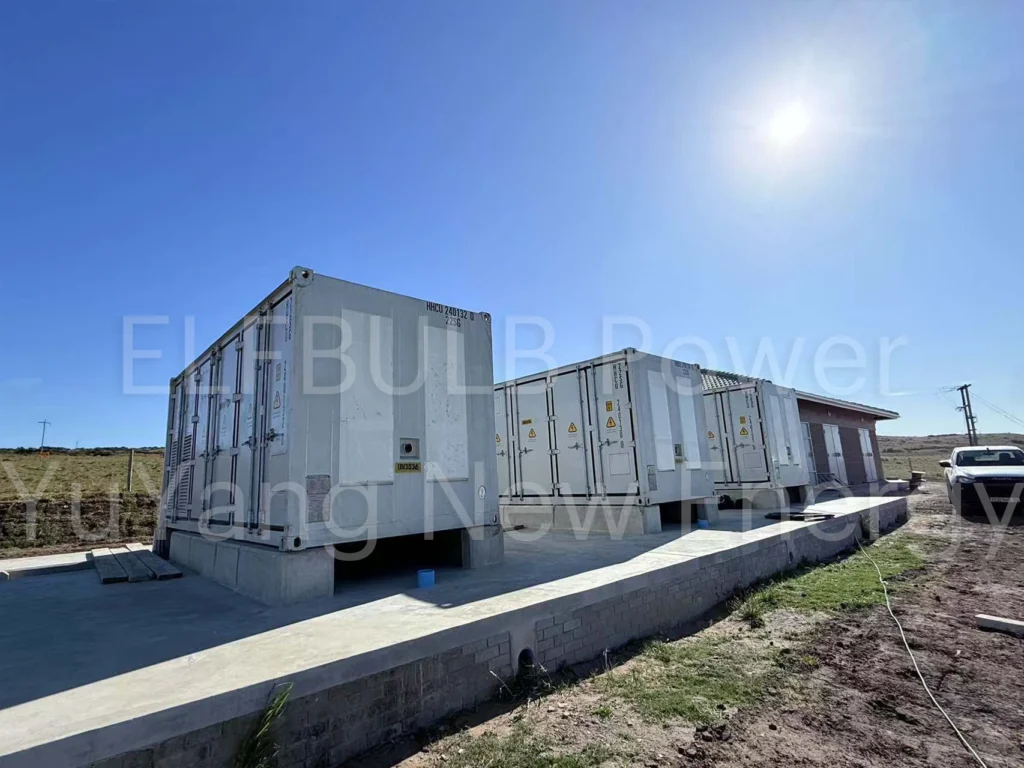
Executive Summary: Infinite Potential in Limited Space

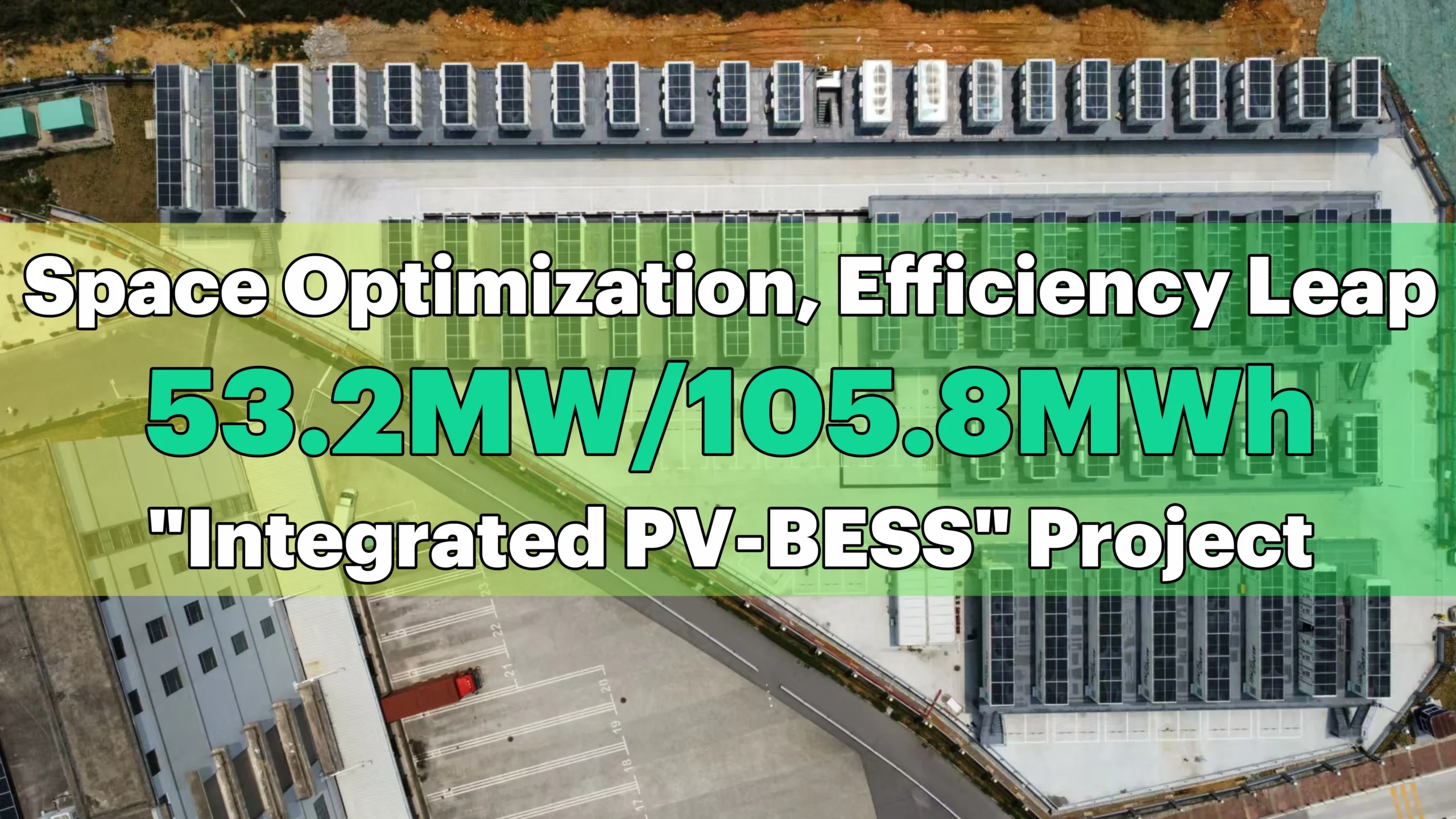
This project successfully deployed an innovative grid-tied PV-BESS (Photovoltaic-Battery Energy Storage System) for a major industrial client. The core highlights of the solution lie in its extreme integration and highly efficient space utilization: on an area of just 3,433 square meters, it achieved a powerful total energy storage capacity of 53.2 MW / 105.8 MWh, while cleverly integrating a 258.9 kWp solar PV system onto the container rooftops.

This “Integrated PV-BESS” design not only solves the challenge of limited space for large-scale energy storage but also, through a unique physical synergy, boosts the overall efficiency of the power station by approximately 2%. It serves as a prime example of a highly effective energy management solution adapted to strict spatial constraints.

I. Project Challenges: Conflict Between High Energy Demand and Site Constraints

For this industrial giant, pursuing energy self-sufficiency and optimizing electricity costs are essential, but two major challenges often restricted the implementation of a storage project:

  • Extreme Footprint Limitation: Land resources in urban or industrial parks are scarce and expensive, making it difficult to secure the extensive space typically required for a megawatt-scale storage system.
  • Balancing Efficiency and Safety: A tightly integrated solution must effectively address the heat dissipation of the storage equipment to ensure the efficiency and longevity of the batteries during high-temperature operation.

II. Our Solution: Integrated PV-BESS for Three-Dimensional Space Utilization

To address the client’s site constraints, we introduced the innovative “Containerized Rooftop PV Integration Solution.”

1. Maximum Density Energy Storage Configuration

The project’s total storage capacity reaches 53.2 MW / 105.8 MWh. By utilizing high-density storage containers, all Power Conversion Systems (PCS), Battery Management Systems (BMS), and battery clusters are highly integrated. This compresses the megawatt-scale station’s footprint to an extreme minimum, perfectly fitting the client’s required deployment space of just 3,433 square meters.

2. Original “Generation + Shading” Synergy

We creatively installed a 258.9 kWp PV array on top of the storage containers. This design delivers two core values:

  • Space Value Addition: The previously unused container tops are converted into a clean energy generation station, achieving three-dimensional utilization of the land.
  • Efficiency Synergy: While generating electricity, the rooftop PV panels provide a natural physical shading layer for the high-thermal-load storage containers below. Testing confirmed that this shading effect effectively lowers the internal temperature peaks and reduces the energy consumption of the HVAC system within the containers, resulting in an estimated overall station efficiency increase of approximately 2%, significantly enhancing system economics.

III. Core Value: Four Functions Driving Corporate Energy Transition

The deployment of this PV-BESS station has delivered multiple benefits to the large industrial client, helping them maintain a competitive edge:

1.  Maximizing Economic Benefits: Energy Arbitrage and Accelerated ROI

The system uses an intelligent Energy Management System (EMS) to accurately forecast market price fluctuations. It stores electricity during off-peak hours (including periods of PV over-generation) and discharges or sells it back to the grid during peak price periods, performing perfect “peak shaving and valley filling.” This highly efficient energy arbitrage model significantly reduces the enterprise’s electricity procurement costs and is projected to substantially accelerate the return on investment.

2. Enhancing Power Resilience: Continuous Power for Production Continuity

Although the system primarily operates in grid-tied mode, a core feature is its “Islanded Operation Capability.” In the event of an unexpected grid failure or blackout, the station can automatically switch in milliseconds to provide continuous, high-quality power to the factory’s critical loads, greatly improving power reliability and operational resilience.

3. Boosting PV Utilization: Making Full Use of Clean Energy

The integration of the BESS perfectly solves the issue of intermittency and volatility typical of solar generation. When PV generation exceeds the immediate needs of the enterprise, the surplus clean electricity is efficiently stored in the 105.8 MWh battery instead of being curtailed or sold back at low rates. This maximizes the self-consumption rate of the PV power.

4. Optimizing Grid Interconnection and Support: Stabilizing the Grid

Acting as a flexible grid resource, the storage station can quickly respond to grid demands for charging and discharging. By smoothing the enterprise’s load curve, it effectively alleviates pressure on the regional power grid and facilitates the integration and uptake of larger volumes of renewable energy, serving as a critical support for grid stability.

Conclusion

This 53.2 MW / 105.8 MWh “Integrated PV-BESS” project is another testament to our leadership in energy solutions. It not only achieves a massive storage capacity on a minimal footprint but also realizes an efficiency gain through PV-BESS synergy, perfectly showcasing our technical expertise in high integration, high efficiency, and customized energy solutions. This system is the ideal choice for enterprises aiming for energy independence, cost reduction, and fulfilling green responsibilities.

Case Summary

Client IndustryStone Quarrying and Transportation
Application ScenarioHigh-intensity short-haul heavy-duty truck transport in a crushed stone quarry.
Core ProductELFBULB Power 576V1120Ah EV Lithium Battery System
ChallengeHigh diesel consumption, severe engine wear due to dust, non-compliant noise, and emissions.
ResultOver 30% reduction in operational costs, achieving zero emissions, near-silent operation, and energy recovery via downhill runs.

I. The Core Pain Points in the Quarry: Diesel Burn & Environmental Stress

In quarries, mines, and construction sites, heavy-duty trucks are the backbone of production. Yet, they present major operational challenges:

  • Exorbitant Fuel Costs: The continuous cycle of heavy-load uphill and empty-load downhill consumes vast amounts of diesel, making up a significant portion of the Total Operating Cost (TOC).
  • Harsh Operating Conditions: Extreme rock dust accelerates wear on traditional diesel engines, leading to high maintenance frequency and costly downtime.
  • Noise and Emissions Conflict: Constant engine noise pollutes the environment and conflicts with increasingly strict environmental regulations.

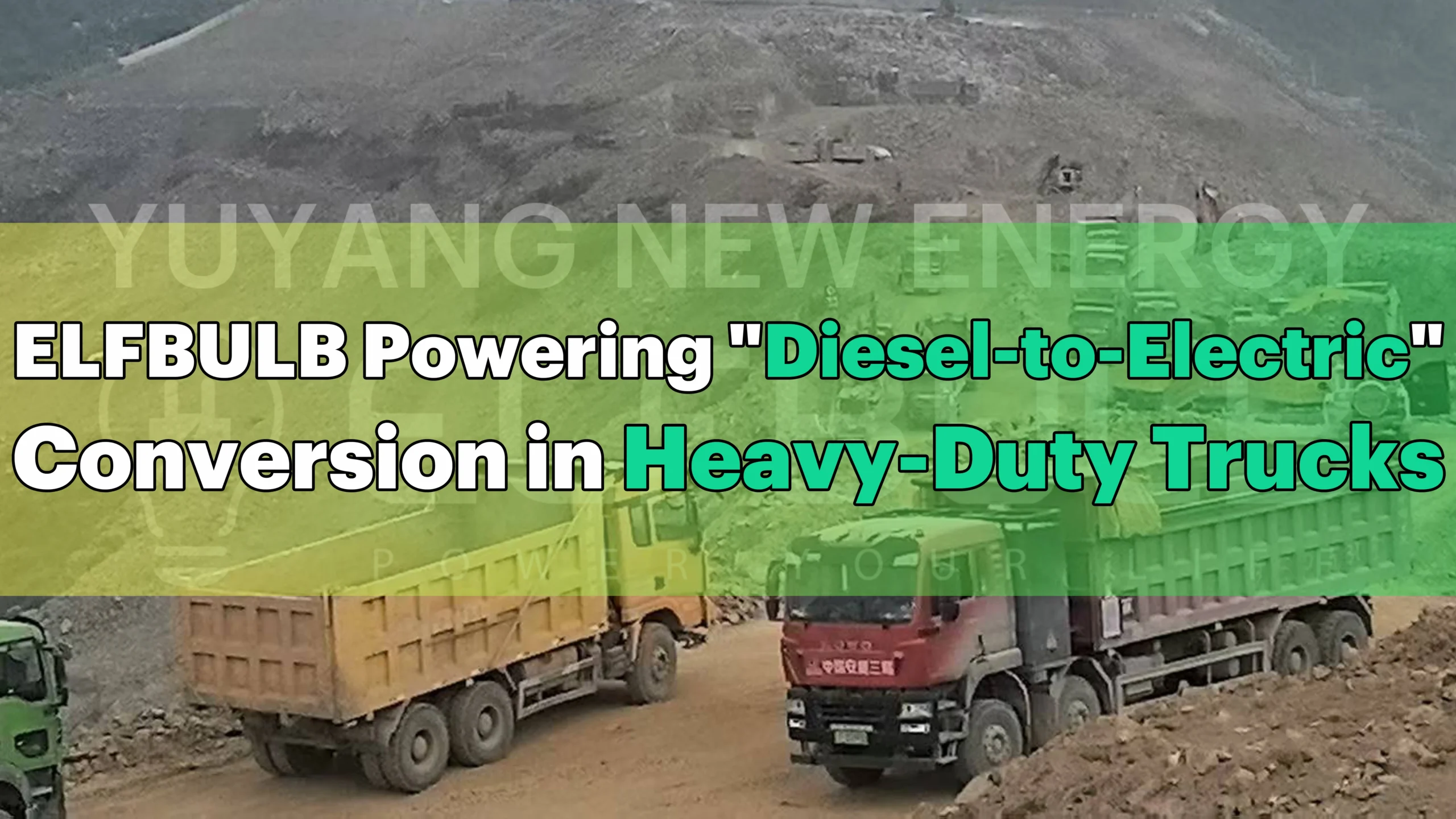
The client opted for a strategic “Diesel-to-Electric” (D2E) conversion, powered entirely by our ELFBULB Power 576V1120Ah EV Lithium Battery System.

II. ELFBULB Power: Tailored Power for Extreme Conditions

To meet the high-torque demand and endure the harsh environment of the quarry, ELFBULB Power delivered a bespoke battery solution:

1. Superior Power Output and Hill-Climbing Capability

We utilized the 576V1120Ah EV Lithium Battery as the core power source. This system features High-C-rate Lithium Iron Phosphate (LFP) cells, boasting high voltage and large capacity, paired with an efficient Liquid Cooling/Heating Thermal Management System specifically designed for heavy-duty trucks. This ensures:

  • Instantaneous Torque Burst: The 576V high-voltage platform guarantees the electric drive system can instantly deliver maximum power and torque during startup and heavy uphill climbs, navigating the quarry’s challenging grades far more efficiently than traditional diesel engines.
  • Reliable Endurance: The ultra-large capacity of 1120Ah ensures the heavy-duty truck has ample range for high-intensity, multi-cycle short-haul rock transport, meeting round-the-clock operational demands.
  • Stable Operation: The battery system maintains an optimal temperature range, ensuring uninterrupted, high-intensity operations regardless of summer heat or winter cold.

2. Unique Energy Recovery: Downhill is Charging Time

The quarry’s unique terrain—frequent downhill runs—means potential energy is often wasted. Our battery system leverages this feature fully:

  • High-Efficiency Regenerative Braking: As the truck descends (empty or light-loaded), the drive motor instantly converts into a generator, transforming the vehicle’s kinetic and potential energy back into electricity, which is then fed back into the 576V1120Ah battery pack.
  • Efficiency Boost: Through highly efficient energy recovery, each cycle provides an estimated 15% to 25% of supplementary range or charge, substantially reducing charging needs and overall energy consumption.

3. Ultimate Safety and Extended Cycle Life

The ELFBULB Power heavy-duty truck battery pack is engineered to meet the stringent IP67 Dust- and Water-Resistance rating, effectively shielding it from the quarry’s dust, moisture, and intense vibration. Furthermore, the high-quality cells guarantee an ultra-long cycle life of over 6,000 cycles, fully supporting the truck’s 8-10 year operational lifespan and drastically reducing the TCO.

III. Case Results: Efficiency Revolution and Green Mining

Since the deployment of the ELFBULB Power 576V1120Ah EV Lithium Battery System, the truck fleet has achieved transformative operational metrics in the quarry, ushering in a new era of green efficiency:

  • 【Significant Economic Benefits】

The electrification project dramatically optimized the client’s energy costs. Compared to conventional diesel trucks, the energy consumption expense of the ELFBULB Power system was reduced by over 30%. Furthermore, due to the simpler nature of the electric drivetrain, which eliminates the high-frequency maintenance associated with traditional engines, maintenance costs for the engine and gearbox were cut by approximately 60%, significantly minimizing vehicle downtime and ensuring production continuity.

  • 【Environmental and Workplace Transformation】

The electric trucks achieved zero emissions, completely resolving the exhaust pollution issue and fully aligning with increasingly strict environmental mandates, thereby helping the client realize their “Green Quarry” strategic goals. Crucially, the working environment saw a vast improvement: the operating noise of the electric trucks was reduced to near-ambient levels, drastically mitigating noise pollution, reducing operator hearing fatigue, and significantly boosting workplace comfort and safety within the quarry.

  • 【Client Testimonial】

Client Feedback: “The sheer power and endurance of the ELFBULB Power 576V1120Ah battery are impressive. It has not only saved us huge amounts on diesel and maintenance but, more importantly, the trucks now have stronger power uphill and offer a better driving experience. This is the most crucial step in our green quarry strategy.”

Case Introduction: A South African Aquaculture Farm’s Power Revolution

Project TitleBattery Energy Storage for South African Aquaculture Farm
System Deployed3.6 MWh Battery Energy Storage System (BESS)
Industry Pain PointLocal grid instability (e.g., “Load Shedding”) threatens continuous operation, risking production halts and severe loss of high-value stock (e.g., Abalone, high-density fish) due to the high power dependency of the facility.
Project Goals1. Ensure power continuity for critical aquaculture operations (pumps, aeration). 2. Maximize production efficiency and safeguard the quality of high-value aquatic products. 3. Reduce vulnerability to external grid fluctuations.

Summary: Modern aquaculture, particularly high-density or high-value farming (like abalone), is critically energy-intensive, relying heavily on pumps, aeration, and climate control. The farm strategically installed a large-scale BESS primarily to guarantee stable, uninterrupted power supply during grid outages or instability, thus protecting the entire stock and production process.

The Role of Energy Storage: A Power Lifeline for Aquaculture

The deployment of the BESS delivers three fundamental values to the aquaculture and processing sector:

1. Power Continuity: Securing Life Support (Reliability)

Core Function: The BESS operates as a robust Uninterruptible Power Supply (UPS), providing immediate, seamless power transfer upon grid failure (e.g., during load shedding).

Practical Benefit: It ensures continuous operation of life support systems like aerators and water circulation pumps. This prevents catastrophic losses of high-density, high-value aquatic stock due to oxygen depletion or water quality degradation.

2. Peak Shaving: Lowering Operating Costs (Economics)

Core Function: The system can be charged during off-peak hours when electricity prices are low and discharged during on-peak hours of high demand.

Practical Benefit: This “peak shaving and valley filling” strategy effectively hedges against high energy prices, significantly reducing the overall operating cost for the energy-intensive aquaculture farm.

3. Renewables Integration: Enabling Green Farming (Sustainability)

Core Function: The BESS can be integrated with renewable sources (like solar PV) to create a microgrid (e.g., “Solar-Aquaculture Hybrid”).

Practical Benefit: It stores and optimizes the use of intermittent clean energy, reducing reliance on the conventional grid or diesel generators. This lowers the facility’s carbon footprint, supporting goals for sustainable and environmentally friendly aquaculture.