1. Charging with Solar Panels

When charging a 300Ah lithium battery using solar panels, several factors come into play. Let’s break it down step by step:

  1. Battery Capacity (Ah): First, determine the capacity of your battery. In this case, it’s 300Ah.
  2. Battery Volts (V): Is your battery 12V, 24V, or 48V? Let’s assume it’s a 12V battery.
  3. Battery Depth of Discharge (DoD): DoD refers to the percentage of battery capacity that has been discharged. If your battery is discharged at 80%, enter that value.
  4. Solar Panel Size (Watts): If you have multiple solar panels, add up their rated wattage. For example, if you have two 100W panels, the total is 200W.
  5. Charge Controller Type: Are you using a PWM or an MPPT charge controller? Choose accordingly.

Now, let’s calculate:

  • Charging Time: Using the calculator, a 12V lithium battery with 200W solar panels will take anywhere between 5 to 20 hours to get fully charged.

2. Charging with a Battery Charger

When using a dedicated battery charger, the process is slightly different:

  1. Battery Capacity: Again, it’s 300Ah.
  2. Battery Depth of Discharge (DoD): Enter the same 80% as before.
  3. Charge Current: The charging current depends on your charger. Let’s assume a 13A charging current.

Now, let’s calculate:

  • Charging Time: A 120Ah battery (since we’re assuming 80% DoD) would take approximately 13 hours to fully charge with a 13A current.

Remember that these calculations are approximate and may vary based on real-world conditions, efficiency losses, and other factors. Always consult your battery manufacturer’s specifications and consider safety precautions during charging.

Tips for Efficient Charging:

  1. Use Quality Components: Invest in high-quality solar panels, charge controllers, and battery chargers.
  2. Monitor Charge Levels: Regularly check your battery’s state of charge to prevent overcharging or deep discharging.
  3. Optimize Sun Exposure: Position your solar panels optimally to maximize sunlight exposure.
  4. Safety First: Follow safety guidelines when handling lithium batteries and charging equipment.

In summary, charging a 300Ah lithium battery involves understanding its capacity, voltage, and depth of discharge. Whether you’re harnessing solar energy or using a charger, efficient charging ensures reliable power for your applications. Happy charging! 🌞🔋

Introduction

Golf trolleys have come a long way from the days of manual push carts. Nowadays, electric golf trolleys are a common sight on golf courses, making it easier for players to navigate the fairways without the physical strain. These electric trolleys rely on batteries for power, and traditionally, lead-acid batteries have been the go-to choice. However, with advancements in battery technology, many golfers wonder if they can switch to lithium-ion batteries. In this article, we’ll explore the pros and cons of making this transition.

The Battle: Lead-Acid vs. Lithium-Ion

1. Energy Storage Solutions

  • Lead Acid Batteries (LABs): These stalwarts have been the energy storage solution of choice for over 150 years. They are heavy, toxic, and require ongoing maintenance. While they get the job done, their limited performance and inefficiency leave room for improvement.
  • Lithium Ferrous Phosphate (LFP) Batteries: Lithium-ion batteries, specifically LFP batteries, offer a superior alternative. They boast twice the energy density, up to four times the usable capacity, and are highly efficient. Plus, they are safe, non-toxic, and maintenance-free.

2. Safety and Toxicity

  • LABs: LABs contain dangerous acids that can leak, posing risks to both users and the environment. Proper enclosures and ventilation are necessary to prevent accidents.
  • LFP Batteries: LFP batteries are safe, don’t leak explosive gases, and won’t spill sulfuric acid. They eliminate the need for elaborate safety measures.

3. Ease of Installation

  • LABs: Heavy and bulky, LABs take up significant space and require careful handling during installation.
  • LFP Batteries: LFP batteries are lightweight and compact, making installation simpler and freeing up valuable space on your golf trolley.

4. Longevity and Total Cost of Ownership

  • LABs: LABs may last only 3-5 years before needing replacement. Their ongoing maintenance costs, reduced performance, and shorter lifespan limit their value.
  • LFP Batteries: A SimpliPhi LFP battery can last 10 years or more, providing 20 times as many charge/discharge cycles under warranty. Despite the initial cost, they prove to be a better investment over time.

Conclusion

While lead-acid batteries have been workhorses, upgrading to lithium-ion batteries offers significant benefits. Golfers can enjoy improved performance, safety, and longevity. As costs continue to decline, LFP batteries are becoming a cost-effective solution for golf trolleys. So, if you’re considering a battery replacement, don’t hesitate to explore the world of lithium-ion technology – your golf game might just thank you!

Golf carts are more than just a means of getting around the golf course. They’re also used in various other settings, such as resorts, retirement communities, and even for personal transportation. Whether you’re a golf enthusiast or simply need a reliable electric vehicle, understanding the right battery for your golf cart is essential. In this guide, we’ll delve into the specifics of golf cart batteries, their maintenance, and how to choose the best one for your needs.

1. Why Golf Cart Batteries Are Different

While golf cart batteries operate similarly to car batteries, there are crucial differences. Attempting to use car batteries in a golf cart is not advisable. Here’s why:

  • Maintenance and Standards: Golf cart batteries have unique maintenance requirements and adhere to specific standards. Using car batteries may lead to compatibility issues or even safety hazards.

2. Understanding Voltage and Battery Configurations

Golf carts typically operate on either a 36V or 48V system. To power your cart effectively, you’ll need a combination of 6V, 8V, or 12V batteries. Here’s what you need to know:

  • Voltage: Voltage (measured in volts) determines the power a battery can exert. Think of it as the horsepower in a vehicle. A 48V battery pack can be more powerful than a 36V pack, but the controller ultimately determines the delivered amps during operation.
  • Amps: Amperage (measured in amps) is akin to a gas tank in a car. More amps mean you can drive your cart farther on a single charge. If you prioritize responsiveness, focus on voltage. For extended rides, consider higher amps.

3. Choosing the Right Battery

When selecting a golf cart battery, keep these points in mind:

  • Deep Cycle Batteries: Opt for deep cycle batteries known for their longevity. They provide consistent power over a more extended period, making them ideal for golf carts.
  • Match the Size: Ensure the battery size matches your golf cart model. Using the right-sized battery ensures optimal performance.

4. Battery Maintenance Tips

To prolong your battery’s life:

  • Regular Charging: Charge your batteries after each use to prevent deep discharge.
  • Water Levels: Check and maintain proper water levels in flooded lead-acid batteries.
  • Clean Terminals: Keep terminals clean and free from corrosion.

Conclusion

Choosing the right golf cart battery involves understanding voltage, amps, and maintenance requirements. By following these guidelines, you’ll ensure a smooth ride and maximize the lifespan of your golf cart batteries.

Remember, safety first—don’t mix car batteries with golf cart batteries. Happy golfing! 🏌️‍♂️

1. Average Lifespan

The average lifespan of golf cart batteries varies based on several factors. Here are some general guidelines:

  • Lead-Acid Batteries: These are commonly used in golf carts. On average, lead-acid batteries last between 3 to 5 years. Proper care and maintenance play a significant role in determining their longevity.
  • Lithium-Ion Batteries: Lithium-ion batteries are gaining popularity due to their lightweight and extended lifespan. An average lithium-ion golf cart battery can last up to 10 years1. These batteries offer better performance, faster charging, and longer drive times.

2. Factors Affecting Battery Lifespan

a. Usage Frequency

  • If you use your golf cart frequently (e.g., 2-3 times a week), the battery’s life expectancy will increase.
  • Conversely, infrequent use may shorten the battery’s lifespan.

b. Maintenance

  • Regular maintenance is essential. Neglecting your batteries can significantly impact their longevity.
  • Check your batteries at least once a month.
  • Use distilled water for topping up lead-acid batteries. Tap water can harm them.
  • Ensure they are fully charged before adding water to prevent overfilling.

c. Overcharging

  • Avoid overcharging your batteries. Older manual chargers may not sense when the battery is fully charged.
  • Newer chargers have built-in algorithms to prevent overcharging.
  • Set a timer or use an alarm clock to avoid “overcooking” your batteries.

d. Battery Brand and Quality

  • The brand you choose matters. High-quality batteries tend to last longer.
  • Research different brands and consider their reputation and user reviews.

e. Environmental Conditions

  • Extreme temperatures (especially heat) can significantly affect battery lifespan.
  • Store your golf cart in a cool, dry place when not in use.
  • Cold weather is less detrimental to batteries than extreme heat.

3. Signs Your Battery Needs Replacement

  • Slow Charging: If your battery takes longer to charge than usual, it might be nearing the end of its life.
  • Weak Acceleration: Reduced power during acceleration indicates battery deterioration.
  • Decreased Drive Time: If your golf cart covers fewer miles on a single charge, it’s time to assess the battery.
  • Battery Leaks: Any signs of leakage or swelling require immediate attention.

4. Conclusion

In summary, golf cart batteries can last anywhere from 3 to 10 years, depending on usage, maintenance, and battery type. Regular care, proper charging, and choosing quality batteries are key to maximizing their lifespan. So, keep those batteries charged, maintain them diligently, and enjoy many rounds of golf or leisurely rides! 🏌️‍♂️🔋

Introduction

As the world transitions towards renewable energy sources, home battery storage systems are gaining popularity. These systems allow homeowners to store excess energy generated from solar panels and use it during peak hours or in case of power outages. In this blog post, we’ll explore the benefits and features of a 5kW inverter package with 5kWh battery storage solution.

What Is a 5kW Inverter Package?

A 5kW inverter package combines an inverter with a battery storage system. Let’s break down what each component does:

  1. Inverter: The heart of any solar energy system, the inverter converts direct current (DC) from solar panels into alternating current (AC) that powers your home. It ensures efficient energy utilization and synchronization with the grid.
  2. Battery Storage: The 5kWh battery stores excess energy generated by your solar panels. During sunny days, when your panels produce more electricity than you need, the surplus energy charges the battery. Later, during cloudy days or at night, you can draw power from the battery.

Key Features of the 5kW Inverter Package with 5kWh Battery Storage

1. Smart Energy Management

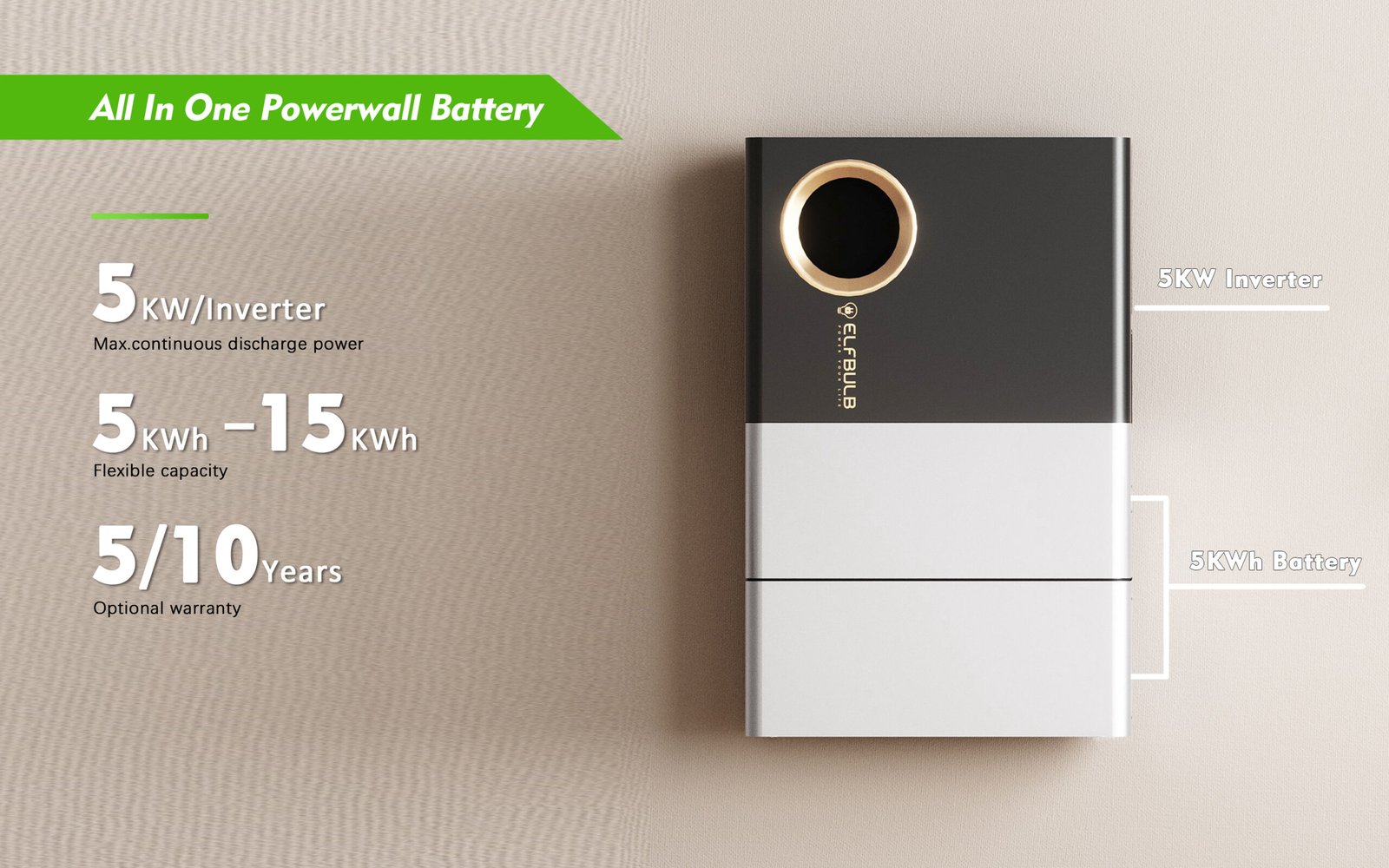
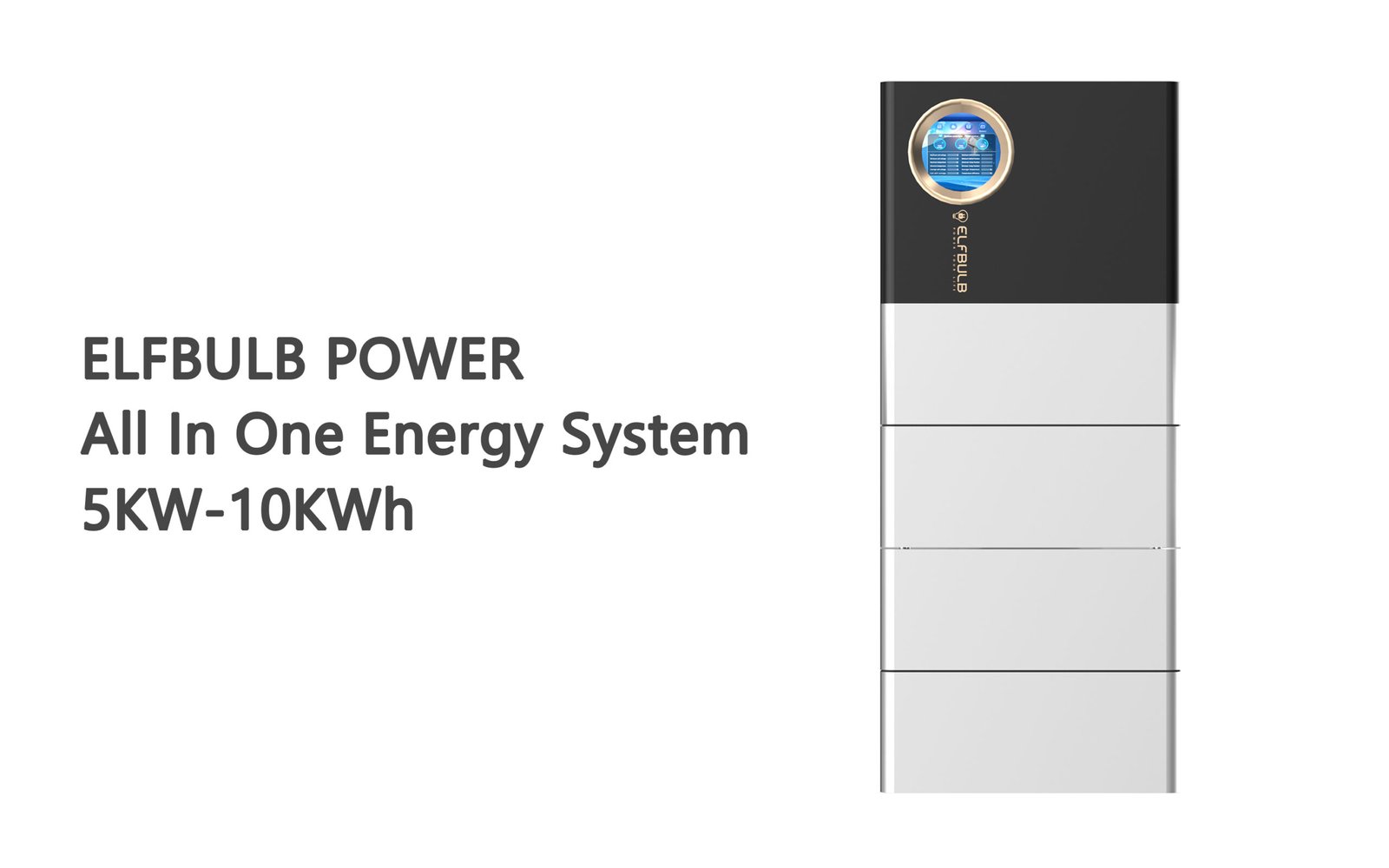
  • Integrated Design: A 5KW inverter and a 5.12KWH LiFePO4 battery in one unit. Seamless compatibility and optimal performance.
  • Plug and Play: Quick and hassle-free installation. No additional costs or time-consuming procedures.
  • Smart Control: Preset charging and discharging in different time periods. Optimize your energy consumption according to your needs. Easy to navigate and customize settings with touch screen interface.
  • Convenient Expansion: Expand your battery capacity with an additional 5KWh battery pack. Simple installation and connection process.
  • Compact Design: Sleek and compact design that is only 150mm thick. Save valuable home space.

2. Blackout Backup

  • Optional blackout backup ensures power to a dedicated circuit during outages. You won’t be left in the dark!

3. Anti-Draining

  • Prioritize devices within the app. For example, if your electric vehicle (EV) is plugged in, the battery won’t drain unless you allow it.

4. Flexible Installation Options

  • New Install or Retrofit: Whether you’re setting up a new solar system or adding storage to an existing one, the 5kW inverter package fits both scenarios.
  • AC and DC Coupled: It works as both an AC and DC coupled battery system, allowing seamless integration with solar PV.

Use Cases

  1. No Solar PV: If you don’t have solar panels, the 5kW inverter package lets you benefit from off-peak rates and grid interactivity.
  2. Existing Solar PV: Add battery storage to your existing solar array. Replace your solar inverter with the combined inverter and battery (libbi).
  3. New Solar Install: Set up a new solar array directly connected to the battery, eliminating the need for an additional inverter.

Conclusion

The 5kW Inverter Package with 5kWh Battery Storage offers intelligent energy management, blackout resilience, and flexibility. Whether you’re a solar enthusiast or a homeowner looking to optimize energy usage, this package provides a sustainable solution for your power needs.

Remember, as the sun shines, your battery charges, and when the lights go out, you’re covered!

As the world transitions toward cleaner energy sources, electric vehicles (EVs) and 10KWh Lithium Battery Energy Storagee System are becoming increasingly popular. One critical aspect of these technologies is understanding how long it takes to charge their batteries. In this blog post, we’ll explore the factors affecting charging time and provide practical insights for renewable energy enthusiasts.

Understanding Battery Capacity

Before diving into charging times, let’s grasp the concept of battery capacity. The capacity of a battery is typically measured in kilowatt-hours (kWh). A 10kWh battery can store 10 kilowatt-hours of energy. Whether it’s an EV battery or a home energy storage system, the capacity determines how much energy the battery can hold.

Factors Influencing Charging Time

Several factors impact the time required to charge a 10kWh battery:

  1. Charging Rate: The charging rate, usually measured in amps (A), determines how quickly energy flows into the battery. Higher charging rates lead to faster charging times. However, it’s essential to consider the battery’s maximum charging rate to avoid damaging it.
  2. Efficiency: No charging process is 100% efficient. Some energy is lost as heat during charging. Therefore, the actual charging time will be longer than the theoretical calculation based on the charging rate.
  3. Battery State of Charge (SoC): Charging from a lower SoC (e.g., 20%) to a higher SoC (e.g., 80%) is faster than charging from 0% to 100%. Most charging stations focus on this range (20% to 80%) for optimal efficiency.
  4. Charging Infrastructure: The type of charger matters. Level 1 chargers (standard household outlets) are slower, while Level 2 chargers (240V outlets) are faster. DC fast chargers used for EVs can significantly reduce charging time.
  5. Battery Chemistry: Different battery chemistries (e.g., lithium-ion, lead-acid) have varying charge characteristics. Lithium-ion batteries, commonly used in EVs, charge faster than lead-acid batteries.

Charging Time Estimates

Let’s estimate the charging time for our 10kWh battery:

  • Charging at 10 Amps: Assuming 100% efficiency, it will take approximately five hours for the battery to go from empty to full. However, charging is often inefficient, so accounting for an 80% efficiency loss, you’ll need to wait around 6.25 hours.
  • Using a Level 2 Charger: A Level 2 charger typically provides 240V and 30A. At this rate, charging a 10kWh battery from 20% to 80% could take around 2 to 3 hours.
  • DC Fast Charging: DC fast chargers can charge an EV battery to 80% in as little as 30 minutes. However, these chargers are not commonly available for home energy storage systems.

Practical Tips

  1. Know Your Charger: Understand the charging capabilities of your EV or home battery system. Invest in a suitable charger to optimize charging time.
  2. Plan Ahead: Charge during off-peak hours when electricity rates are lower. This also reduces strain on the grid.
  3. Monitor SoC: Avoid fully depleting the battery. Frequent partial charges are better for battery health.
  4. Consider Solar: If you’re using renewable energy, consider coupling your battery with solar panels for sustainable charging.

In conclusion, charging a 10kWh lithium battery varies based on factors like charging rate, efficiency, and infrastructure. Stay informed, choose the right equipment, and embrace the clean energy revolution! 🌱⚡

Let’s dive into the fascinating world of 100Ah vs 200Ah batteries. These two battery capacities are commonly used in various applications, from solar power systems to recreational vehicles. In this blog post, we’ll explore the differences, advantages, and considerations for each type.

Understanding Battery Capacity

Before we compare 100Ah and 200Ah batteries, let’s clarify what these numbers represent. The Ah (ampere-hour) rating indicates the amount of charge a battery can deliver over a specific period. Here’s a quick breakdown:

  • 100Ah Battery: Can provide 100 amps of current continuously for one hour.
  • 200Ah Battery: Can deliver 200 amps of current continuously for one hour.

Power Output and Backup Time

  • 100Ah Battery:
    • Provides a decent amount of power for moderate applications.
    • Suitable for small solar setups, camping, or powering low-draw devices.
    • Backup time depends on the load; it might last several hours to a day.
    • Compact and lighter than its larger counterpart.
  • 200Ah Battery:
    • Packs more punch in terms of power output.
    • Ideal for larger systems, off-grid living, or running high-demand appliances.
    • Offers extended backup time due to its higher capacity.
    • Bulkier and heavier but provides longer autonomy.

Considerations

a. Space and Weight

  • 100Ah: Smaller and easier to handle. Great for tight spaces.
  • 200Ah: Larger and heavier. Requires more room but offers greater energy storage.

b. Redundancy

  • 100Ah: If one battery fails, the other can still provide power (if using two in parallel).
  • 200Ah: Single battery; no redundancy. Failure means complete power loss.

c. Cost

  • 100Ah: Generally more affordable.
  • 200Ah: Slightly pricier due to its larger capacity.

d. Lithium vs. Lead-Acid

  • Lithium Batteries:
    • Both sizes available.
    • Lightweight, longer lifespan, faster charging.
    • Expensive upfront but cost-effective over time.
  • Lead-Acid Batteries:
    • Commonly found in 100Ah and 200Ah variants.
    • Heavier, shorter lifespan, slower charging.
    • More budget-friendly initially.

Conclusion

Choose based on your specific needs:

  • 100Ah battery: Versatile, portable, and budget-friendly.
  • 200Ah battery: Powerful, long-lasting, and suitable for energy-intensive setups.

Remember to verify specifications, consider your power requirements, and decide whether redundancy matters. Whether you’re building a solar system, setting up an RV, or planning an off-grid adventure, the right battery choice can make all the difference!

1. Battery Basics: Lead Acid vs Lithium Phosphate

Before we delve into specific applications, let’s discuss the two major types of batteries in the 200Ah range:

  • Lead Acid Batteries: These are commonly used in deep-cycle applications. A 200Ah lead-acid deep-cycle battery running a 400-watt DC load with a 50% recommended Depth of Discharge (DoD) will last for approximately 3 hours. For instance, it can power a 400W-rated refrigerator for about 25 hours at a rate of 40 watts per hour.
  • Lithium Phosphate (LiFePO4) Batteries: Although more expensive, LiFePO4 batteries offer several advantages. They are intrinsically deep-cycle, allowing them to be discharged to a much greater depth than lead-acid batteries. Most LiFePO4 batteries can be discharged up to 95%, but it’s recommended to stay around 80% to maximize battery life. A 200Ah LiFePO4 battery connected to a 400-watt DC load with an 80% DoD will last for almost 5 hours. It can power a 400W-rated fridge for about 55 hours.

2. AC vs. DC Loads

When considering battery runtime, it’s essential to distinguish between AC and DC loads:

  • AC Loads: These are appliances that require alternating current (like what you get from utility companies). To power AC loads, an inverter is needed to convert DC to AC. High-quality inverters are about 95% efficient, meaning you lose 5% of running time due to inverter electronics. A 200Ah lead-acid deep-cycle battery, with a 50% DoD, will run a 400W AC appliance for about 3 hours.
  • DC Loads: These are devices directly powered by the battery (such as solar panels). Since no inverter is involved, DC loads generally run longer. For example, a 200Ah battery can power a DC load for more extended periods.

3. What Can a 200Ah Battery Run?

Unless you’re using the battery for marine or RV purposes, 200Ah batteries are often associated with home appliances. Here’s an approximate rundown based on a 200Ah lead-acid deep-cycle battery with a 50% discharge (compensated for inverter losses):

  • LED Lights: Several days
  • Laptop or Phone Chargers: Several days
  • Small Fans: A day or more
  • TVs: Several hours
  • Refrigerators: Around 3 hours
  • Microwaves: About 1 hour

Remember that these estimates are fairly linear, except for appliances with large motors (like fridge compressors) that cycle on and off.

In summary, a 200Ah battery is a versatile power source, capable of running various home appliances. Whether you’re camping, boating, or preparing for emergencies, understanding its capabilities ensures you make the most of your battery investment.

What is battery capacity?

Before we delve into specifics, let’s grasp the basics. A 200Ah battery refers to a battery with a capacity of 200 Amp-hours. This capacity indicates the amount of energy it can store. But how does this translate into practical usage?

What are the factors that affect battery life?

Several factors impact how long a 200Ah battery will last:

  1. Battery Chemistry: The type of battery matters. We’ll focus on two common types:
    • Lead-Acid Batteries: These are robust and widely used. A 200Ah lead-acid deep-cycle battery can power a 400W DC load for approximately 3 hours when discharged to 50% of its capacity.
    • Lithium Phosphate (LiFePO4) Batteries: These are more expensive but offer advantages. A 200Ah LiFePO4 battery, with an 80% Depth of Discharge, can last for nearly 5 hours with a 400W DC load.
  2. Load Connected: The device you connect to the battery significantly affects run time. Here are some examples:
    • A 200Ah lead-acid battery can run a 400W-rated refrigerator for about 25 hours at a rate of 40 watts per hour.
    • The same LiFePO4 battery can power the same fridge for approximately 55 hours under similar conditions.
  3. AC vs. DC Loads:
    • DC Loads (such as solar panels and batteries) are more efficient. A 200Ah lead-acid battery, when converted to AC using an inverter, will run an AC appliance for about 3 hours.
    • Inverters are about 95% efficient, so some power is lost during conversion.

Practical Scenarios

  • RV Adventures: If you’re an RV traveler, your 200Ah battery can last between 2 to 8 hours depending on the appliances you’re using. For instance:
    • Drawing 25 amps? Expect it to last 8 hours.
    • Remember, large motors (like fridge compressors) may alter this linear relationship.
  • Home Appliances:
    • Fridge: A 200Ah lead-acid battery can power a fridge for around 25 hours.
    • Heater: A 200Ah battery can run a 1500W space heater for about 1.44 hours.

Maximizing Battery Life

  • Discharge Depth: To extend battery life, avoid deep discharges. For lead-acid batteries, stick to 50% Depth of Discharge.
  • LiFePO4 Advantage: LiFePO4 batteries allow deeper discharges (up to 95%) while maintaining longevity.

Conclusion

In summary, a 200Ah battery is a versatile companion, whether you’re camping, powering appliances, or exploring off-grid. Understanding its capabilities empowers you to make informed decisions. So, next time you’re planning an adventure, consider the battery that’ll keep your devices humming!

RememberBattery life is like a journey, and with the right knowledge, you can make it a pleasant one. 

To determine if a 100Ah battery can run a 3000W inverter, we need to calculate the runtime of the inverter. The runtime of an inverter depends on the energy capacity of the battery and the amount of power drawn by the inverter.

The equation to calculate the runtime is as follows:

Battery Ah ÷ Inverter Amps = Runtime

To calculate the inverter amps, we need to divide the wattage of the inverter by the voltage of the battery. Assuming a 12V battery, the inverter amps would be:

3000W ÷ 12V = 250A

Therefore, the runtime of a 3000W inverter with a 100Ah battery would be:

100Ah ÷ 250A = 0.4 hours

This means that a 100Ah battery would not be sufficient to run a 3000W inverter for an extended period of time. You would need a larger battery or multiple batteries to provide enough energy for the inverter.

Posts pagination