Forklifts are essential pieces of equipment in many industries, and their power source is a critical component of their operation. The most common type of forklift battery is the lead-acid battery.

Lead-Acid Batteries

Also known as “wet cell batteries,” lead-acid batteries are the most prevalent in the market. They generate electricity through an electrochemical reaction between lead plates and a mixture of sulfuric acid and water.

Components

The components of lead-acid batteries include:

  • Battery case
  • Cells
  • Bars
  • Plates of lead dioxide
  • Cables
  • A mixture of water and sulfuric acid

Lifespan

Lead-acid forklift batteries generally last between 1,000 and 1,500 cycles. That equals about 3 to 5 years with over 300 workdays per year.

Lithium-Ion Batteries

While lead-acid batteries are the most common, lithium-ion batteries are gaining popularity. They offer many benefits compared to lead-acid batteries, such as sealed cells to eliminate leaks, short charging period, no water maintenance, and environmental friendliness.

Introduction

Electric vehicles (EVs) are gaining popularity as environmentally friendly alternatives to traditional gasoline-powered cars. One crucial aspect of EV ownership is understanding how they charge. In this article, we’ll explore the principles behind EV charging, the different charging levels, and what you need to know to keep your EV juiced up.

The Basics

  1. AC vs. DC Charging:
    • The power grid and household outlets provide alternating current (AC), while EV batteries require direct current (DC) voltage.
    • To charge an EV, we need to convert AC to DC. This conversion happens through specialized charging equipment.
  2. Charging Levels:
    • EVs have three primary charging levels:
      • Level 1: Plugging the cord set that comes with your EV into a regular 120-volt outlet. This slow charging method takes between 40 and 50 hours to charge from empty.
      • Level 2: Charging from a 220-volt outlet or hardwired equipment. Level 2 charging typically takes about four to ten hours. Many EV owners install Level 2 chargers in their garages for convenient overnight charging.
      • Level 3 (DC Fast Charging): These chargers provide the fastest speeds. They can charge an EV from empty in as little as 20 minutes. Level 3 chargers are commonly found at public charging stations, making them ideal for road trips or quick top-ups.
  3. Charging Times:
    • Charging times depend on factors such as battery size, charging level, and the state of charge.
    • Most EV drivers rarely charge from completely empty to full. Instead, they “top off” their batteries, which speeds up the process.
    • Manufacturers recommend keeping the battery charge between 20% and 80% to extend its lifespan.
  4. Cost Considerations:
    • Level 1 charging is slow but may suffice for daily needs.
    • Level 2 chargers are common at workplaces and commercial parking lots.
    • Level 3 chargers are faster but more expensive to use.
  5. Future Trends:
    • New Level 3 chargers are significantly more powerful, charging at up to 350kW.
    • As EV adoption grows, charging infrastructure will continue to improve.

Conclusion

Understanding EV charging principles empowers you to make informed decisions about your charging needs. Whether you’re charging at home, work, or on the road, knowing the basics ensures a smooth and efficient EV experience.

Remember: Every time you plug in your EV, you’re contributing to a cleaner, greener future! 🌱🚗

Product Link: EV Charger (elfbulbpower.com)

Introduction

Lithium batteries are a popular choice for powering a wide range of devices, from smartphones to electric cars. However, proper storage is crucial to maintain their performance and safety. This blog post will guide you through the best practices for storing lithium batteries.

Understanding Lithium Batteries

Lithium batteries are high-energy storage devices. They are lightweight and can hold a charge for a long period, making them ideal for various applications. However, they can pose safety risks if not handled or stored correctly due to their reactive lithium core.

Best Practices for Storing Lithium Batteries

1. Store at Room Temperature

Lithium batteries should be stored in a cool, dry place, ideally at room temperature. Extreme temperatures, both hot and cold, can degrade the battery’s performance and lifespan.

2. Avoid Full Charge or Discharge

Batteries should not be stored at full charge or complete discharge. Ideally, lithium batteries should be stored at around 50% charge. This helps maintain the battery’s health and prolongs its lifespan.

3. Use Protective Cases

If possible, store your lithium batteries in protective cases to prevent physical damage. This also helps to avoid contact with metal objects that could cause short circuits.

4. Regular Check-ups

Regularly check stored batteries for any signs of damage or leakage. If you notice any abnormalities, it’s best to safely dispose of the battery.

Conclusion

Proper storage of lithium batteries is crucial for maintaining their performance and ensuring safety. By following these guidelines, you can help prolong the lifespan of your batteries and keep them in optimal condition.

Remember, always consult the battery manufacturer’s instructions for specific storage guidelines. Stay powered up and safe with proper lithium battery storage!

Please note: This blog post is intended to provide general advice on lithium battery storage. For specific advice tailored to your circumstances, please consult with a professional.

Keywords: Lithium Batteries, Battery Storage

Introduction

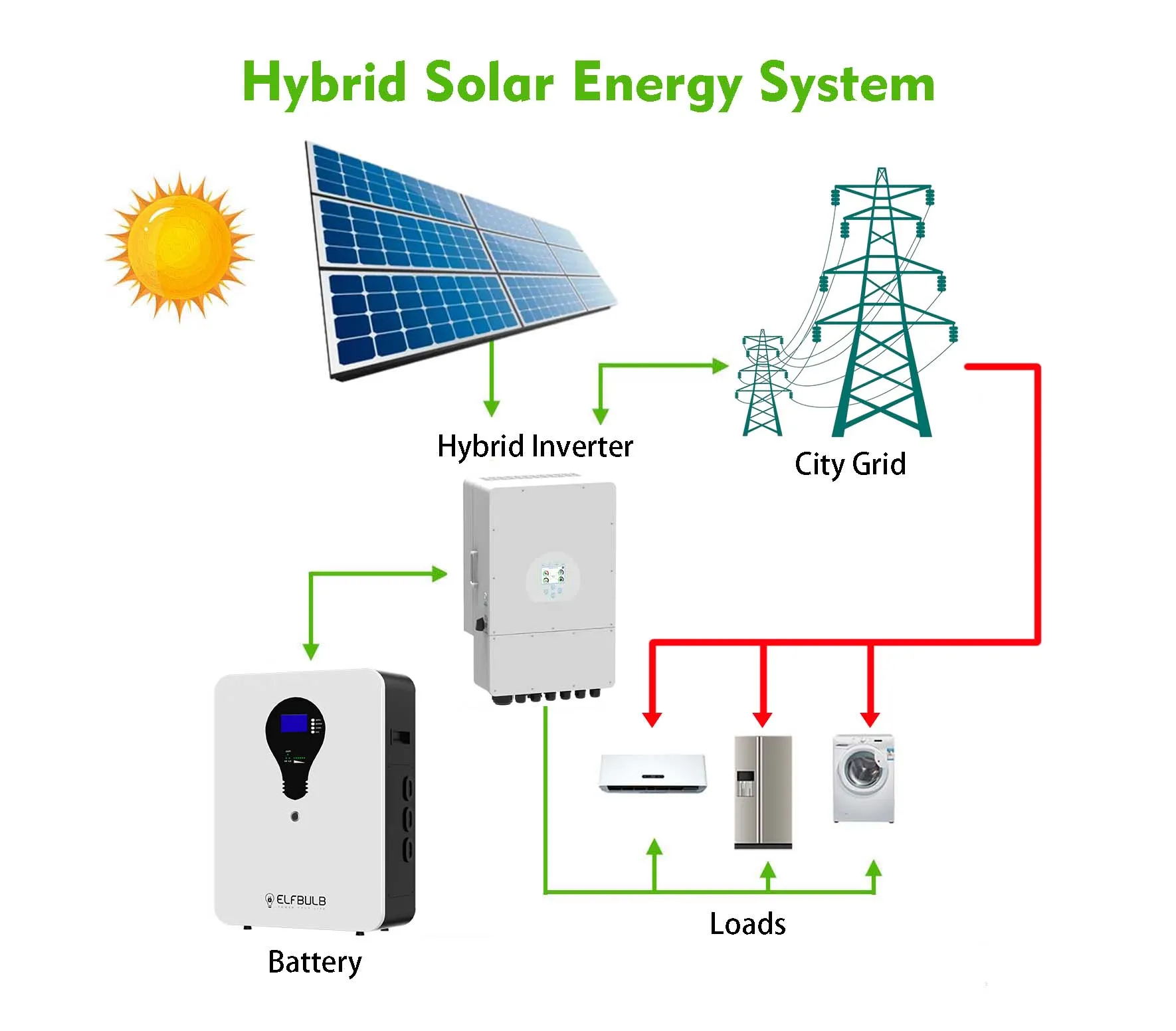
Hybrid solar power systems are gaining popularity as a reliable and efficient source of renewable energy. This blog post will delve into what a hybrid solar power system is, how it works, its benefits, and why it might be the perfect solution for your energy needs.

What is a Hybrid Solar Power System?

hybrid solar power system is a combination of a traditional grid-connected solar system and a battery storage system. It’s called ‘hybrid’ because it uses both solar power and grid power to provide electricity, ensuring a consistent supply even when sunlight is not available.

How Does a Hybrid Solar Power System Work?

A hybrid solar power system works by harnessing the power of the sun during the day, storing excess energy in batteries for use at night or during power outages. When the solar panels produce more electricity than your home needs, the surplus energy charges the batteries. If the batteries are fully charged, the excess power is fed back into the grid.

Benefits of a Hybrid Solar Power System

  1. Reliability: Hybrid solar power systems provide a consistent power supply, regardless of weather conditions or time of day.
  2. Energy Independence: With a battery storage system, you can store excess solar power for use when needed, reducing reliance on the grid.
  3. Cost Savings: By using stored solar power during peak times, you can avoid high electricity rates and save on your energy bills.
  4. Environmentally Friendly: Solar power is a renewable energy source, making hybrid systems a green and sustainable solution.

Conclusion

A hybrid solar power system offers a flexible, reliable, and sustainable solution for your energy needs. By harnessing the power of the sun and storing it for later use, you can enjoy energy independence while also saving on your electricity bills and contributing to a greener planet.

Remember, every home is unique, so it’s essential to consult with a solar energy expert to determine the best system for your needs. Embrace the power of the sun and make the switch to a hybrid solar power system today!

Please note: This blog post is intended to provide a general understanding of hybrid solar power systems. For specific advice tailored to your circumstances, please consult with a professional.

Keywords: Hybrid Solar Power System, Renewable Energy, Solar Power, Battery Storage, Grid Power, Energy Independence, Cost Savings, Environmentally Friendly

When it comes to power backup solutions, one of the most common questions people ask is, “How many hours of backup does a 300Ah battery provide?” The answer to this question is not as straightforward as it might seem. It depends on several factors, including the power consumption of the devices you’re using and the efficiency of the battery itself. In this article, we’ll break down these factors and help you understand how long a 300Ah battery can last.

Understanding Ampere-Hours

Firstly, it’s important to understand what “Ah” or Ampere-hours mean. Ampere-hour is a unit of electric charge, equal to the charge transferred by a steady current of one ampere flowing for one hour. So, a 300Ah battery can theoretically deliver a current of 300A for one hour, or 1A for 300 hours, and so on.

Calculating Backup Time

The backup time of a battery can be calculated using the formula:

Backup Time=Load Power (W)Battery Capacity (Ah)×Battery Voltage (V)​

For example, if you have a 12V 300Ah battery and you’re powering a device that consumes 600W, the backup time would be:

Backup Time=600W300Ah×12V​=6 hours

This calculation assumes 100% efficiency, but in reality, batteries are not 100% efficient due to factors like internal resistance and energy loss as heat.

Factors Affecting Battery Backup Time

Several factors can affect the backup time of a battery:

  • Load Power: The more power your devices consume, the faster the battery will drain.
  • Battery Efficiency: As mentioned earlier, batteries are not 100% efficient. A typical lead-acid battery has an efficiency of around 85%.
  • Battery Age: As batteries age, their capacity decreases, reducing the backup time.
  • Temperature: Batteries tend to perform worse in extreme temperatures, which can also reduce backup time.

Conclusion

In conclusion, the backup time of a 300Ah battery depends on the power consumption of your devices and the efficiency of the battery. By understanding these factors and doing some simple calculations, you can estimate how long your battery will last. Remember, it’s always a good idea to have a bit of extra capacity to account for inefficiencies and unexpected power needs.

When it comes to battery management, understanding the maximum charging current is crucial. This is especially true for large capacity batteries like a 300Ah battery. In this article, we will delve into what the maximum charging current is and how it’s determined for a 300Ah battery.

What is Charging Current?

Charging current refers to the amount of electric current supplied to the battery during the charging process. It is usually measured in amperes (A). The charging current plays a significant role in determining how quickly a battery can be charged.

Determining the Maximum Charging Current

The maximum charging current for a battery is typically determined by its chemistry and capacity. For most lead-acid and lithium-ion batteries, the recommended charging current is between 0.1C and 0.3C, where ‘C’ refers to the battery’s capacity.

For a 300Ah battery, this means:

  • At 0.1C: The charging current would be 0.1 * 300Ah = 30A
  • At 0.3C: The charging current would be 0.3 * 300Ah = 90A

So, the maximum charging current for a 300Ah battery would typically be around 30A to 90A. However, it’s important to check the manufacturer’s specifications as these can vary based on the specific battery model and design.

Factors Affecting the Charging Current

Several factors can affect the maximum charging current of a battery:

  • Battery Chemistry: Different types of batteries (like lead-acid, lithium-ion, nickel-cadmium) have different charging characteristics and thus different maximum charging currents.
  • Battery Temperature: Batteries tend to accept less current as they heat up, so the maximum charging current can decrease as the battery temperature rises.
  • State of Charge: A deeply discharged battery can often accept a higher current than a battery that is nearly full.

Conclusion

In conclusion, the maximum charging current for a 300Ah battery is typically between 30A and 90A, but this can vary based on several factors. Always refer to the manufacturer’s specifications to ensure you are charging your battery safely and efficiently.

Introduction

When considering a backup power solution for your home, the question often arises: Can a 15 kW generator handle the energy demands of an entire house? Let’s explore the factors involved and find out.

Understanding Power Requirements

  1. Electricity Usage: The first step is to assess your household’s electricity consumption. Check your last 12 months of electricity bills to determine your average usage. Keep in mind that energy needs can vary significantly between seasons.
  2. Central AC: If your home has central air conditioning, it significantly impacts the generator size. Central AC units typically require more power. Select your AC size (usually 1 to 5 tons) to refine your estimate.

Generator Sizing

  1. 15 kW Generator: A 15 kW generator can handle essential appliances in a large home or meet the needs of a smaller to mid-sized home with average power requirements .
  2. Whole House Consideration: For a portable generator capable of powering the entire house, consider a 10,000-watt generator or even a 15,000-watt portable generator. These robust options provide peace of mind during power outages .

Solar Panels as an Alternative

  1. Solar Power: Another eco-friendly option is solar energy. In the UK, an average home uses around 3,731 kWh per year. A 5 kW solar system (or possibly a 4 kW system) could suffice. Keep in mind that sunshine hours vary throughout the year, affecting solar generation .
  2. Panel Count: A 3.5 kW system typically requires about 12 panels, while a 4 kW system might need 14 to 15 panels. Ensure your south-facing roof has adequate space for installation .

Conclusion

In summary, a 15 kW generator can handle various scenarios, but it’s essential to match the generator size to your specific needs. Whether you choose a generator or explore solar panels, prioritize safety, efficiency, and sustainability.

Remember, when it comes to powering your home, informed decisions lead to uninterrupted comfort. 🏡💡

Let’s explore the differences between rack-mounted batteries and wall-mounted batteries, two common energy storage solutions. Whether you’re a tech enthusiast or a business owner seeking the right battery setup, understanding these options is essential.

Rack-Mounted Batteries

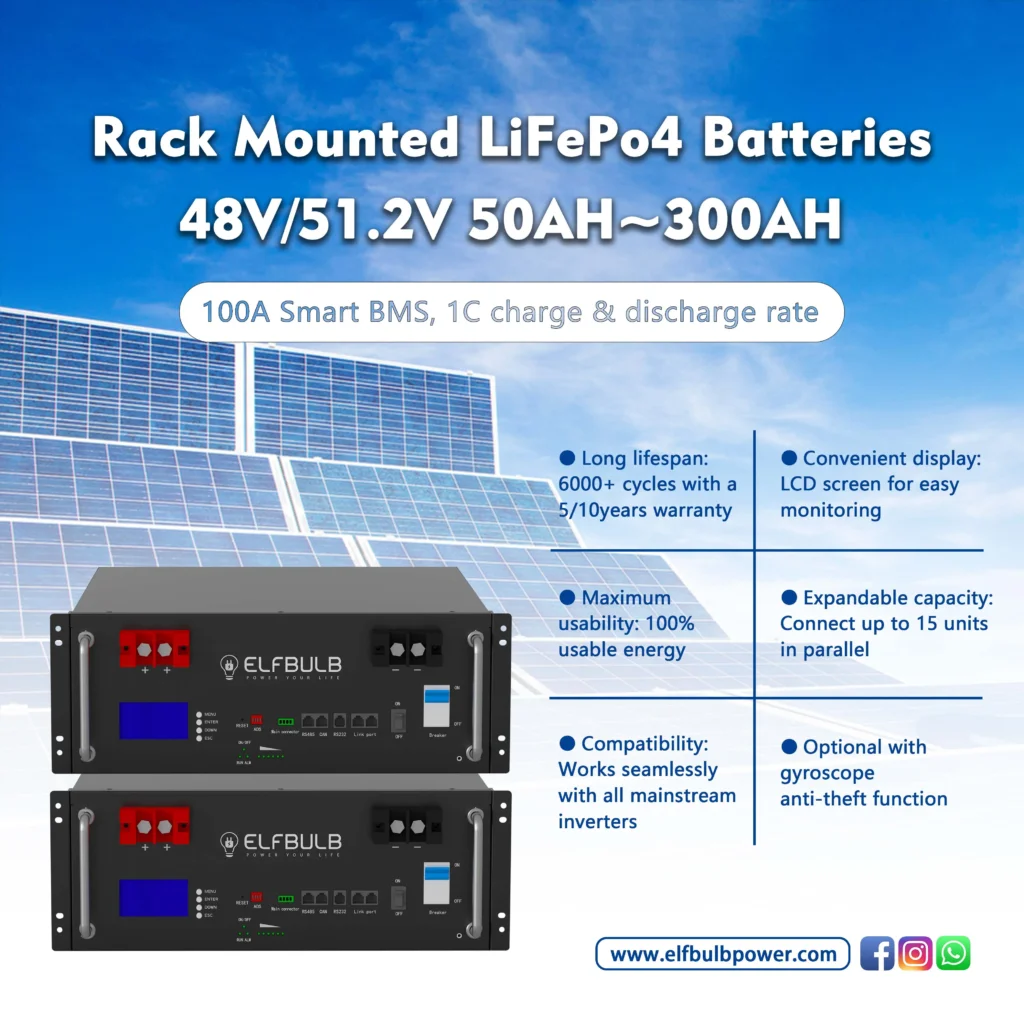
  • Definition: Rack-mounted batteries are designed to be installed on racks or shelves within a designated space. They are commonly used in data centers, telecom facilities, and industrial settings.
  • Battery Technology:
    • Vented Lead-Acid (VLA) Batteries: These are typically large, flooded or wet-cell batteries used in very large UPS systems. VLA batteries are always rack-mounted.
    • Valve-Regulated Lead-Acid (VRLA) Batteries: These can be mounted on racks or in cabinets. VRLA batteries are more common and versatile.
  • Size Considerations:
    • Rack-mounted configurations are favored for larger batteries (both physically and in terms of ampere-hour rating). Typically, once a battery unit exceeds 100 AH, rack mounting becomes practical.
    • Cabinets are more suitable for smaller battery units.
  • Number of Cells and Strings:
    • Rack-mounted batteries are ideal for systems with high DC voltages (e.g., 250 to 800 Volts). The decision involves analyzing reliability and maintainability.
    • Redundancy and the number of failure points play a crucial role.
  • Location:
    • Rack-mounted batteries are often installed in battery rooms, where access is restricted to authorized personnel.
    • Smaller UPS systems (up to 250 kVA) may be directly installed in the computer room alongside their respective battery cabinets.
  • Hazards:
    • Electrical Hazard: Open rack batteries expose potentially lethal voltage, necessitating installation in restricted-access battery rooms.
    • Fire Hazard: Proper placement and safety measures are critical.

Wall-Mounted Batteries

  • Definition: Wall-mounted batteries are directly attached to the wall, offering a space-saving solution.
  • Features:
    • Space Efficiency: Wall-mounted batteries maximize floor space, making them ideal for smaller environments.
    • Visibility and Security: The front panel typically has a solid glass door, allowing visibility of internal equipment while ensuring security.
    • Ease of Installation: Wall-mounted batteries are straightforward to install and fix in place.

In summary, if you have limited space and need a compact solution, consider wall-mounted batteries. For larger setups and flexibility, rack-mounted batteries are the way to go.

Remember to choose based on your specific needs and available space. Happy powering! 🌟

When it comes to choosing between two 100Ah batteries or a single 200Ah battery, the decision isn’t as straightforward as it might seem. Let’s delve into the details and explore the pros and cons of each option.

Two 100Ah Batteries

  1. Advantages:
    • Redundancy: Having two separate batteries provides a safety net. If one battery fails, you still have the other to rely on.
    • Distribution of Weight: Splitting the load between two batteries can be advantageous, especially if you’re concerned about weight distribution in your setup.
    • Higher Current Draw: In some cases, having two batteries may allow for a higher current draw, which can be beneficial for power-hungry devices.
  2. Considerations:
    • Complexity: Managing two batteries requires additional wiring and monitoring. You’ll need to ensure both batteries are charged evenly.
    • Space: Accommodating two batteries might be challenging if you have limited space in your setup.
    • Cost: Purchasing two batteries involves higher initial costs compared to a single battery.

One 200Ah Battery

  1. Advantages:
    • Simplicity: A single battery streamlines your installation process. There’s less wiring and maintenance involved.
    • Space Efficiency: If space is a concern, a larger single battery might be the better choice.
    • Lower Component Count: With only one battery, there’s less chance of component failure.
  2. Considerations:
    • Backup: If the single battery fails, you won’t have a backup power source.
    • Weight: Larger batteries can be heavier, so consider weight restrictions if you’re mobile.

Conclusion

Ultimately, the decision depends on your specific needs and circumstances. Evaluate factors such as available space, weight limitations, desired redundancy, and overall cost. Whether you choose two 100Ah batteries or a single 200Ah battery, make an informed choice based on your unique requirements.

When choosing a home energy storage battery, consider the following factors:

  1. Capacity: The battery’s capacity is measured in kilowatt-hours (kWh) and represents the amount of energy the battery can store. Choose a capacity that meets your needs, considering your appliance usage and the number of devices you want to power during an outage.
  2. Power Output: The battery’s power output is measured in kilowatts (kW) and represents the maximum amount of power the battery can deliver. Make sure the battery’s power output is sufficient to meet the demands of your appliances, especially during startup.
  3. Efficiency: The battery’s efficiency represents how effectively it stores and releases energy. A more efficient battery can save you money and extend the battery’s life.
  4. Cycle Life: The battery’s cycle life indicates the number of times it can be fully charged and discharged before its performance degrades. A longer cycle life means the battery will last longer.
  5. Warranty: The warranty covers the battery in case of failure or performance degradation. Choose a reputable brand(eg.tesla,elfbulb,pylontech) that offers a long warranty.
  6. Cost: The cost of a battery varies depending on its capacity, power output, and efficiency. Choose a battery that offers the best performance and value within your budget.
  7. Installation: Consider the ease of installation of the battery and whether you will need to hire an electrician to install it.

Additional Tips:

Consider your energy needs and usage patterns.
Research different battery brands and read reviews.
Compare the warranty terms of different batteries.
Purchase the battery from a reputable supplier.
Maintain the battery regularly to extend its lifespan.
By considering these factors, you can choose the best home energy storage battery for your needs and budget.

Posts pagination